
How Do You Know When Your Car Needs a Wheel Alignment?
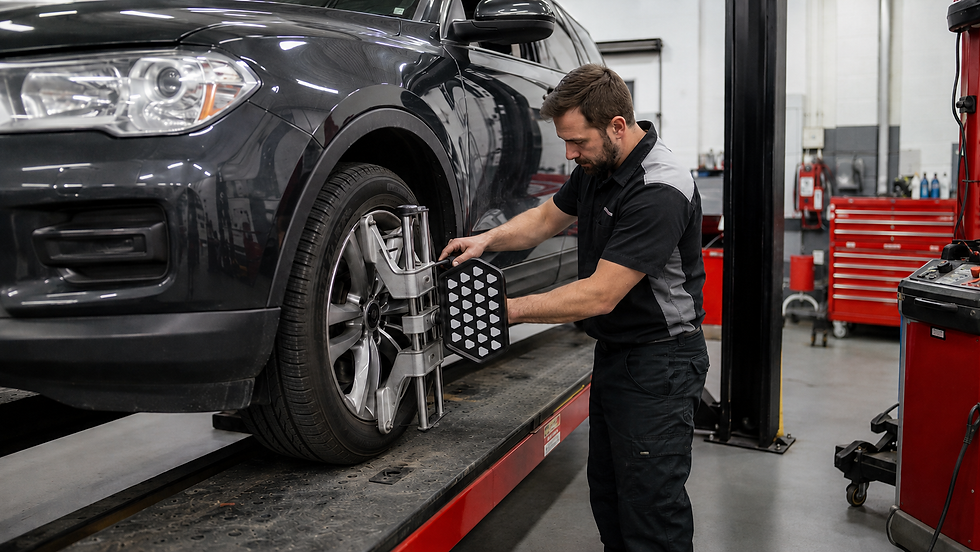
Your vehicle should travel straight without requiring you to constantly fight the steering wheel. If your car begins pulling to one side, your steering wheel sits crooked, or your tires are wearing strangely, a wheel alignment problem could be responsible. Alignment can gradually move outside manufacturer specifications through normal driving or be affected by impacts such as potholes and curbs.
Getting a car alignment when it is needed is about more than making the vehicle easier to drive. Proper alignment helps your tires contact the road as intended, promotes even tire wear, and contributes to predictable steering and handling.
What Is a Wheel Alignment?
Despite the name, a wheel alignment does not involve physically straightening the wheels themselves. Instead, a technician measures and adjusts specific suspension and steering geometry so the wheels are positioned according to the vehicle manufacturer's specifications.
Three measurements commonly associated with alignment are camber, caster, and toe. These angles affect how the tires sit against the road and how the vehicle responds while driving.
Small differences can matter. A wheel that appears perfectly straight to the eye can still be far enough outside specification to cause uneven tire wear or handling problems.
Signs You Need an Alignment
There are several common symptoms that can indicate your vehicle should have its alignment checked.
Vehicle pulling to one side: If your car consistently wants to drift or pull left or right on a reasonably flat road, alignment may be one possible cause.
Uneven tire wear: Alignment problems can cause certain areas of a tire to wear faster than others. If one edge of your tire is noticeably more worn, it is worth investigating why.
Crooked steering wheel: When you're traveling straight, your steering wheel should generally sit centered. A noticeably off-center wheel can be a sign that the alignment needs attention.
Changes after hitting a pothole or curb: A hard impact can affect suspension components or alignment settings. If the vehicle begins driving differently afterward, an inspection is a smart move.
These symptoms can also be caused by tire or suspension problems, which is why having the vehicle properly inspected is important before assuming an alignment alone will solve the issue.
Can Bad Alignment Ruin Your Tires?
It can certainly shorten their lifespan.
When the wheels are outside their proper alignment specifications, the tires may not make even contact with the road. Instead of the tread wearing evenly across its surface, one section can wear significantly faster.
That means a set of tires that otherwise had plenty of usable life remaining may need to be replaced earlier than expected. Keeping up with tire alignment and suspension maintenance can help you get more useful mileage from your tires.
What Happens During a Wheel Alignment?
During a professional alignment, specialized equipment measures the position and angles of the wheels. The technician compares those measurements with specifications established for your particular vehicle.
Adjustable alignment angles are then corrected where necessary. If worn or damaged suspension or steering components are preventing the vehicle from being properly aligned, those problems may need to be addressed first.
Once everything is within the appropriate specifications, the vehicle should have more predictable steering and the tires should be better positioned for even wear.
Wheel Alignment in Pantego, TX
Potholes, rough roads, curb impacts, and everyday driving can all eventually leave your vehicle needing an alignment check. If you've noticed pulling, unusual tire wear, or an off-center steering wheel, it may be time to have the vehicle inspected.
KTC Auto Care provides wheel alignment in Pantego, TX along with tire, shock, strut, and other suspension-related services. Correcting alignment problems can improve handling, protect your tires from unnecessary wear, and help your vehicle feel the way it should when you're behind the wheel.